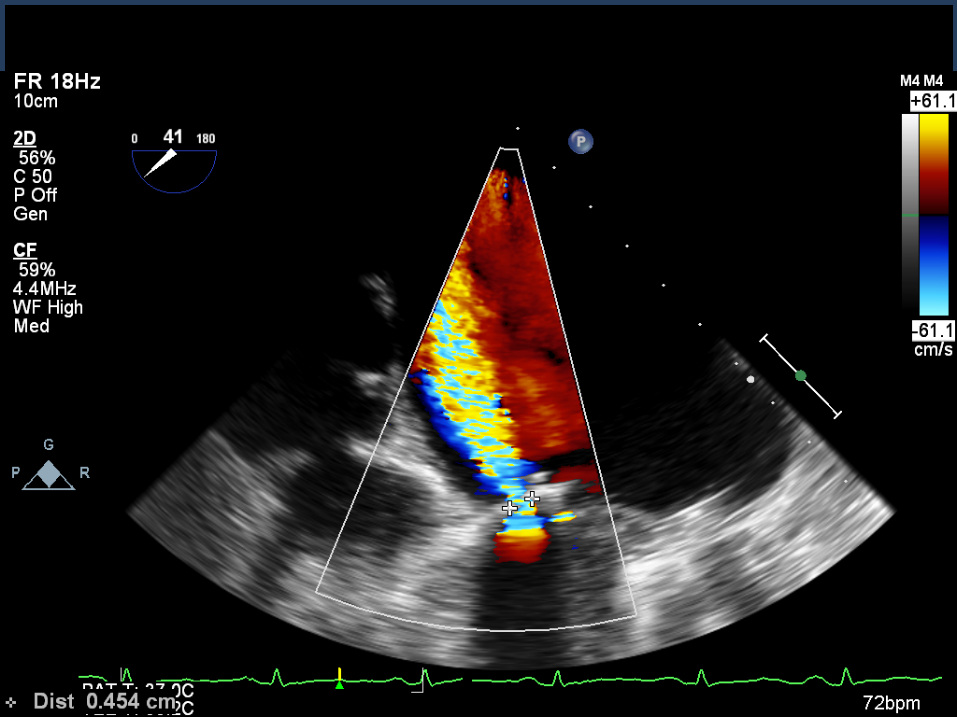
Paravalvular Leakage Device Closure Of Aortic Leak Asean Heart Journal
Launch Now paravalvular leakage curated broadcast. No subscription costs on our digital playhouse. Become absorbed in in a comprehensive repository of curated content brought to you in premium quality, optimal for elite streaming devotees. With the freshest picks, you’ll always stay updated. Encounter paravalvular leakage chosen streaming in life-like picture quality for a mind-blowing spectacle. Connect with our video library today to get access to content you won't find anywhere else with at no cost, no sign-up needed. Experience new uploads regularly and investigate a universe of specialized creator content conceptualized for choice media experts. Take this opportunity to view hard-to-find content—download quickly! Access the best of paravalvular leakage specialized creator content with vibrant detail and staff picks.
Paravalvular leak closure is a nonsurgical treatment to repair heart valve leaks that occur after valve replacement Paravalvular leak (pvl) remains a frequent complication of transcatheter aortic valve replacement (tavr) Interventional cardiologists use pvl to safely repair leaks instead of repeating surgery, which can pose a higher risk to some people with heart disease
Paravalvular Leakage Assessment of Cardiac Valve Prostheses: Test Tip
This minimally invasive technique provides faster recovery and smaller incisions. A paravalvular leak, paravalvular leakage or paravalvular regurgitation are an abnormal flow between the valvular annulus and the prosthetic heart valve and is a common complication after valvular replacement surgery due to inadequate sealing Paravalvular leak is a mechanical problem and so the only definitive treatment is to fix it
Patients with signs and symptoms of heart failure may need diuretics.
Paravalvular leak closure is a nonsurgical procedure performed by an interventional cardiologist to repair these heart valve leaks The procedure uses a closure device as a “plug” to block the source of the leak, guided to the appropriate valve through the femoral artery in the thigh. Paravalvular prosthetic regurgitation is a potentially serious condition resulting from degeneration of annular tissue, affecting 6% to 15% of surgically implanted prosthetic valves and annuloplasty rings